
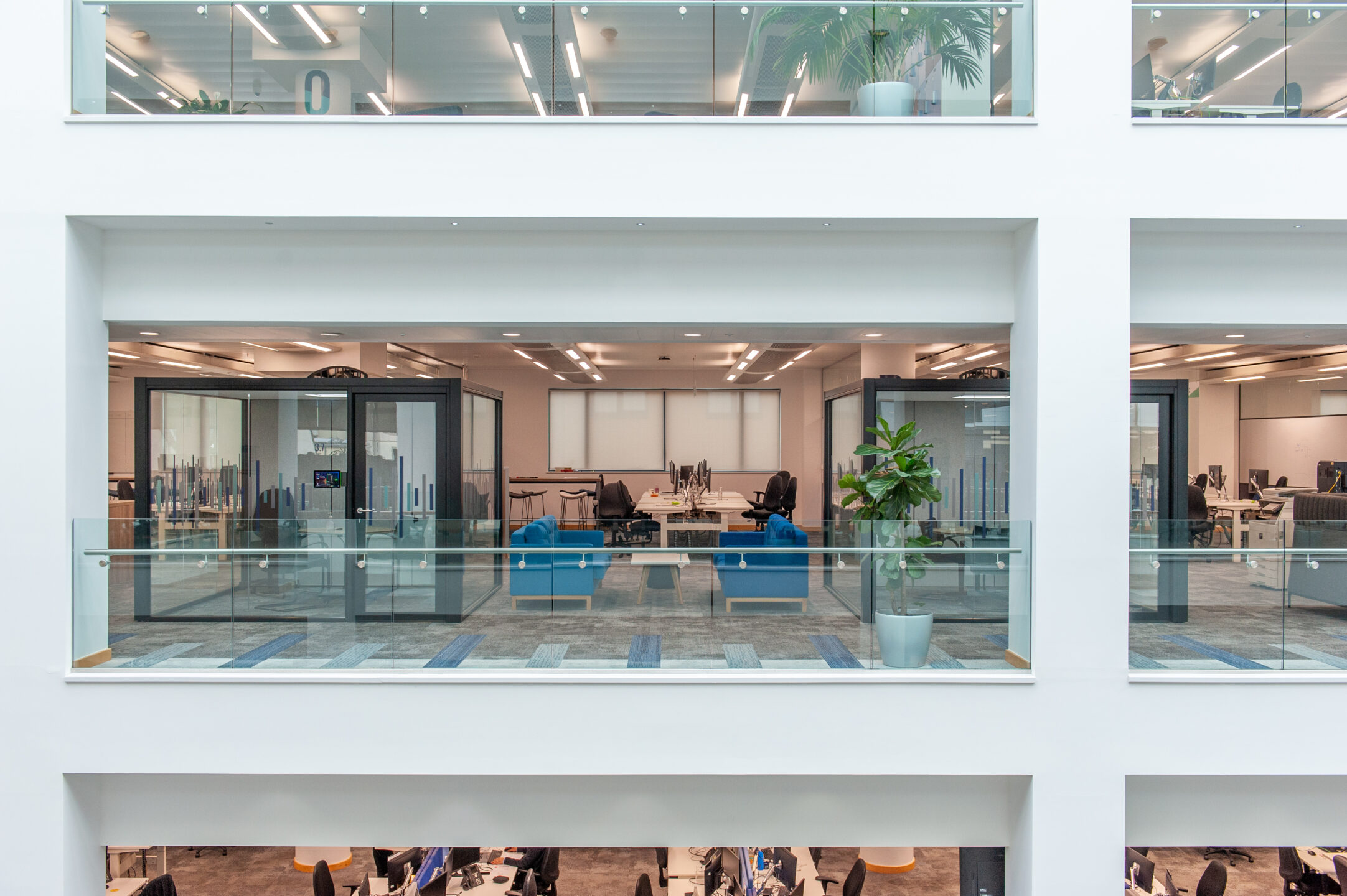
How Workplace Design Can Improve Concentration

Creating environments that support focused work enables people to think more clearly, solve problems more effectively and produce their best work. This is where smart workplace design plays an important role in improving concentration.
Modern workplaces are now busier and more connected than ever before with meetings, emails, instant messages and conversations all competing for our attention. This makes it increasingly difficult to find the time and space for focused work.
Although technology has transformed the way we work, it has also created more opportunities for distraction. For organisations investing in productivity, employee wellbeing and workplace experience, concentration is increasingly becoming part of the conversation.
Every element of a workplace, from the layout and lighting to acoustics and furniture, influences how easily people can concentrate throughout the day. Thoughtful workplace design creates environments that support different styles of working, giving people the freedom to collaborate when they need to and focus when the task demands it.
Why concentration matters
Much of today’s work relies on cognitive performance rather than physical output. Strategic planning, creative thinking, analysis, report writing and problem solving all require sustained attention and space to think.
When concentration is repeatedly broken, it can take time to regain focus. Even small distractions can disrupt thought processes, making complex tasks feel more demanding and increasing mental fatigue.
Organisations continue to invest in technology, training and process improvements to help employees perform at their best. But the physical workplace and surroundings should be considered with the same level of importance.
A well-designed environment can help remove unnecessary distractions, support comfort throughout the day and create the conditions people need to do their best work.
Good workplace design recognises that everyone works differently
There is no one-size-fits-all environment that helps every single person concentrate. Some employees prefer complete silence when carrying out focused work, while others find a degree of background activity helps them stay engaged. Some benefit from natural daylight and open views, while others prefer quieter, enclosed spaces where interruptions are less likely.
Individual preferences can also be influenced by personality, job role and neurodiversity. Workplace designers are increasingly recognising the importance of providing a variety of environments rather than expecting one workspace to support every activity.
This flexibility has become one of the defining characteristics of modern workplace design.
Rather than creating offices made up entirely of open-plan desks or enclosed areas, many businesses are introducing a wider variety of spaces that allow employees to choose the setting that best suits the work they are doing.
Creating spaces that support different types of work
The most successful workplaces rarely treat every square metre in exactly the same way.
Different tasks require different environments. Focused work benefits from quiet spaces with minimal interruptions. Team discussions need collaborative areas where people can share ideas comfortably. Informal conversations may be better suited to breakout spaces, while private meetings require enclosed rooms that provide confidentiality.
Rather than expecting one workspace to support every activity, many businesses are creating a range of environments that employees can move between as their day progresses. Quiet focus rooms, collaboration hubs, meeting rooms and informal breakout spaces each serve a different purpose, allowing people to choose the setting that best supports their particular task.
This choice of spaces encourages movement throughout the day while giving employees greater control over how and where they work. The result is a workplace that supports concentration when it’s needed, without losing the opportunities for collaboration that remain essential to modern working.
The importance of acoustics
Noise is one of the most common distractions within busy workplaces, but volume is only part of the picture.
Research has shown that conversations are often more distracting than general background noise because our brains naturally pay attention to speech. This is why carefully considered acoustic design has become an important element of workplace design.
Acoustic panels, soft furnishings, flooring finishes and ceiling treatments can all help manage sound within an office environment. Equally important is the positioning of different work settings. Positioning collaboration areas away from quiet workspaces and reducing unnecessary through traffic can improve the overall working environment.
By considering acoustics from the earliest stages of an office refurbishment or workplace fit out, organisations can create spaces that better support concentration throughout the working day.
Light, comfort and wellbeing
Access to natural daylight has also long been recognised as an important factor in workplace wellbeing. Well-positioned desk areas, open sightlines and thoughtful space planning can help maximise daylight, creating brighter and more comfortable working environments.
Artificial lighting also plays an important role. As discussed in our recent article on circadian lighting, lighting strategies that reflect natural daylight patterns can help support alertness during the day while contributing to employee comfort.
Comfort extends beyond lighting and the introduction of ergonomic furniture, suitable temperatures, good air quality and carefully selected finishes all contribute towards creating environments where people can remain comfortable for longer periods without unnecessary physical distractions.
When these elements work together, employees are better placed to maintain concentration throughout the day.
Designing for concentration without limiting collaboration
Collaboration remains an essential part of modern working life and many organisations have redesigned their workplaces to encourage communication, creativity and knowledge sharing. While these environments bring significant benefits, they also highlight the importance of balancing collaboration with opportunities for focused work.
Successful workplace design considers both requirements together. Rather than separating collaboration and concentration into competing priorities, well-designed workplaces allow employees to move naturally between different environments depending on the task they are undertaking.
This balance supports more effective teamwork while recognising that many activities still require uninterrupted thinking.
Concentration in educational spaces
The same workplace design principles apply within educational environments.
Schools, colleges and universities need spaces that support a wide variety of learning experiences. Students may move between lectures, collaborative workshops, independent study, practical activities and quiet reading throughout the day.
Providing a range of learning environments allows educators to match teaching methods with the space that best supports them.
Acoustics, lighting, furniture and spatial planning all contribute towards creating educational spaces where students can concentrate, engage with learning and collaborate effectively with their peers.
As learning continues to evolve, flexibility is becoming just as important within educational spaces as it is within the modern workplace.
Workplace design that supports performance
The role of workplace design has expanded significantly in recent years. Today, organisations expect more from their workplaces than simply providing desks and meeting rooms. They want environments that attract talented people, support wellbeing, encourage collaboration and help employees perform at their best.
Concentration sits at the centre of many of these ambitions, because when people have access to spaces that support focused work, they are often able to make better decisions, solve problems more effectively and produce higher-quality work. At the same time, providing collaborative and social environments encourages creativity, teamwork and stronger organisational culture.
Creating this balance requires careful planning and a clear understanding of how people use their workplace every day.
Designing for the way people really work
The most effective workplaces are designed around people rather than assumptions.
Understanding how employees work, where they collaborate, when they need privacy and which activities require deep concentration allows organisations to create environments that genuinely support day-to-day performance.
At Cobus, workplace projects begin with understanding these behaviours before design concepts are developed. By considering factors such as layout, acoustics, lighting, flexibility and employee experience together, workplaces can be created that support both concentration and collaboration without compromising either.
As organisations continue to adapt to changing ways of working, workplace design will play an increasingly important role in shaping how people think, learn and perform. The environments people work in have a direct influence on how effectively they can think, learn and solve problems. By creating workplaces that balance focused work with opportunities for collaboration, organisations can help individuals and teams perform at their best.