
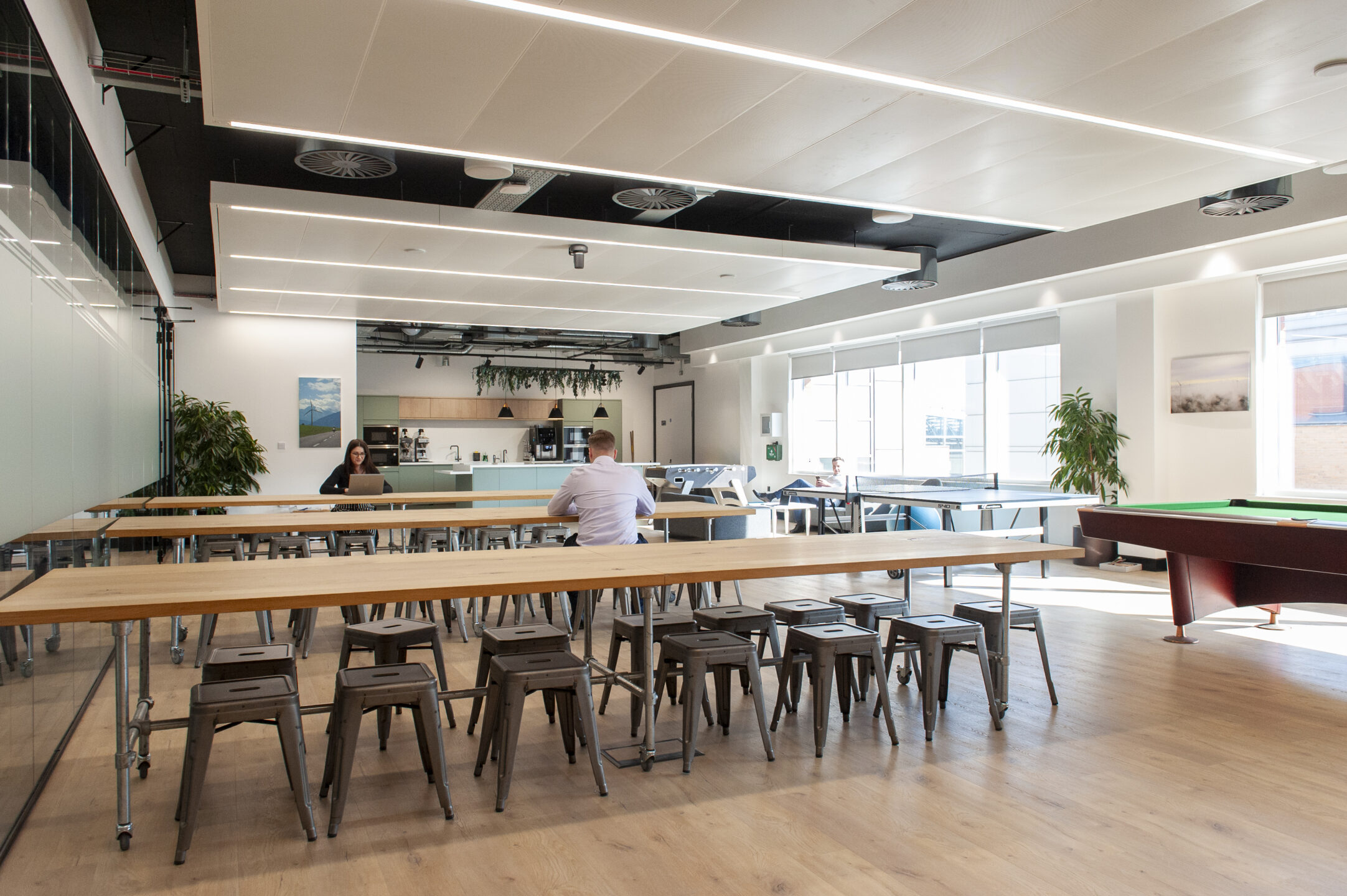
How To Create A Workplace Strategy For Your Business

Creating a well-planned, people-first workspace brings real benefits – from boosting productivity to enhancing employee wellbeing and strengthening company culture. A strategy-led approach ensures your environment evolves alongside your business, supporting growth, innovation, and long-term success.
Building a successful workplace strategy for your business has never been more important. Post-pandemic shifts, the rise of hybrid working, and the need to retain top talent mean companies must rethink how, and where, work happens.
Many organisations are understanding their existing office layouts are no longer supporting their employees the way they used to with the evolution of different working styles and roles. Whether it’s creating better collaboration spaces, reimagining office design, or improving flexibility, designing an environment that supports your team is critical for long-term growth and employee satisfaction.
In this guide, we’ll walk through the essential steps to craft a strategy that balances productivity, wellbeing, and innovation – helping your people thrive and setting your workplace up for lasting success.
Step 1: Understand Your Current Situation
Before you can create an effective workplace strategy, you need a clear view of where you are now. Start by auditing both your physical space and your company culture – what’s working well, and where are the pain points? Common triggers for change often include rapid growth, shifts toward hybrid working, or noticing large areas of underused space.
To make your audit actionable, consider asking the following questions:
- Where are people currently working from (home, hot desks, fixed desks, breakout spaces)?
- Which areas are being underused, and why? Are shared or collaborative spaces being overlooked?
- Are there consistent complaints around comfort, such as noise levels, temperature, or lighting?
- Is current technology supporting the way people work?
- Do any meeting rooms or working areas require additional AV equipment, such as extra displays or microphones?
- How flexible is the space? Can teams easily reconfigure areas to suit their needs?
Gathering simple data makes a huge difference. Look at desk occupancy rates and meeting room usage – your office will often reflect patterns in behaviour. You’ll also want employee feedback to get a real sense of how people actually use your environment. Don’t overlook small details; sometimes it’s the day-to-day frustrations that reveal bigger systemic issues.
Step 2: Define Your Workplace Goals
Once you understand your current workspace, the next step is setting clear goals for your new workplace solutions. Your environment should align directly with your broader business strategy: whether that’s supporting growth, boosting collaboration, improving talent retention, or all of the above.
Good workplace strategies combine over-arching strategic goals, such as cutting overheads or 40% growth rate in 5 years, with softer goals like boosting morale or reinforcing a sense of belonging. Having this mix ensures your workplace strategy isn’t just focussed on your workplace now but it’s also considering the future.
Some examples of workspace goals may include:
- Improve Space Efficiency: Conduct a space utilisation study to identify underused areas and reconfigure the layout to introduce multipurpose zones, such as agile workstations, hot-desking, and integrated storage, allowing for better use of space without compromising comfort or productivity.
- Increase Employee Collaboration: Introduce a variety of shared workspaces, including open collaboration zones, breakout areas, and tech-enabled meeting rooms. These spaces will be strategically located to encourage spontaneous interaction and cross-team engagement throughout the day.
Step 3: Involve Your People
A truly effective workplace strategy is built with your people, not just for them. It’s important to gather input from employee’s from all level’s of the business ensuring the feedback addresses all areas. Surveys, in-person interviews or team workshops will give you an insight into how your teams work, what they need and where the current environment falls short.
When staff feel heard, they’re much more likely to embrace change later on. Early buy-in can help reduce resistance to new layouts, policies, or ways of working, making the transition smoother for everyone.
Step 4: Plan for Flexibility
Today’s office’s must adapt quickly to the ever-competitive market with workplaces becoming more advanced and technology driven. Building flexibility into your workplace strategy is essential if you want to future-proof your workplace for growth, change, and evolving team needs.
Think about creating an agile workplace that supports both hybrid working patterns and on-site collaboration. Modular furniture, mobile workstations, and reconfigurable breakout areas make it easier to adapt your layout without major upheaval. This kind of setup lets businesses respond to changing team sizes, new projects, or shifts in how employees prefer to work.
Step 5: Design Your Ideal Space
Once the planning is in place, it’s time to bring your workplace to life. The best spaces balance functionality with inspiration — helping teams perform at their best while creating a setting people genuinely want to spend time in.
At Cobus Spaces, we specialise in designing offices that not only look impressive but solve real business challenges. Good design considers sensory elements too — natural lighting, acoustic control, colour psychology, and biophilia all play vital roles in enhancing mood, focus, and creativity.
A successful office isn’t just about impressive visuals. It’s about spaces that drive better collaboration, boost employee wellbeing, support flexible work, and strengthen company culture. Every detail, from how meeting rooms are positioned to the choice of seating in breakout areas, should be carefully planned to match your team’s real needs.
Step 6: Measure and Adjust
Even the best workplace strategy needs regular review. Once your new environment is in place, it’s important to track how well it’s working — using both usage data (like meeting room bookings or desk occupancy) and employee satisfaction scores.
Every six to twelve months, take time to reassess. Are collaboration spaces being used effectively? Is employee wellbeing improving? Are teams making the most of flexible working areas? Collect a mix of quantitative metrics and qualitative feedback to get a full picture. Conversations, surveys, and observational studies all offer valuable insights into how the space supports your evolving business needs.
Flexibility is key. As your company grows or new ways of working emerge, your workplace should adapt too. Building in regular checkpoints ensures your environment stays aligned with your culture, goals, and people.
How a workplace strategy can help you
Creating a well-planned, people-first workspace brings real benefits – from boosting productivity to enhancing employee wellbeing and strengthening company culture. A strategy-led approach ensures your environment evolves alongside your business, supporting growth, innovation, and long-term success.
At Cobus Spaces, we specialise redefining spaces, confidently delivering solutions that are collaborative, inspiring and will change the way you work. Our team works closely with you to understand your goals, your people, and your challenges, turning insight into practical, lasting workplace solutions.
If you’re ready to build a smarter, more adaptable office, we’re here to help. Start today by speaking to one of our experts — or read our Office Redesign Checklist to kick-start your planning journey.