
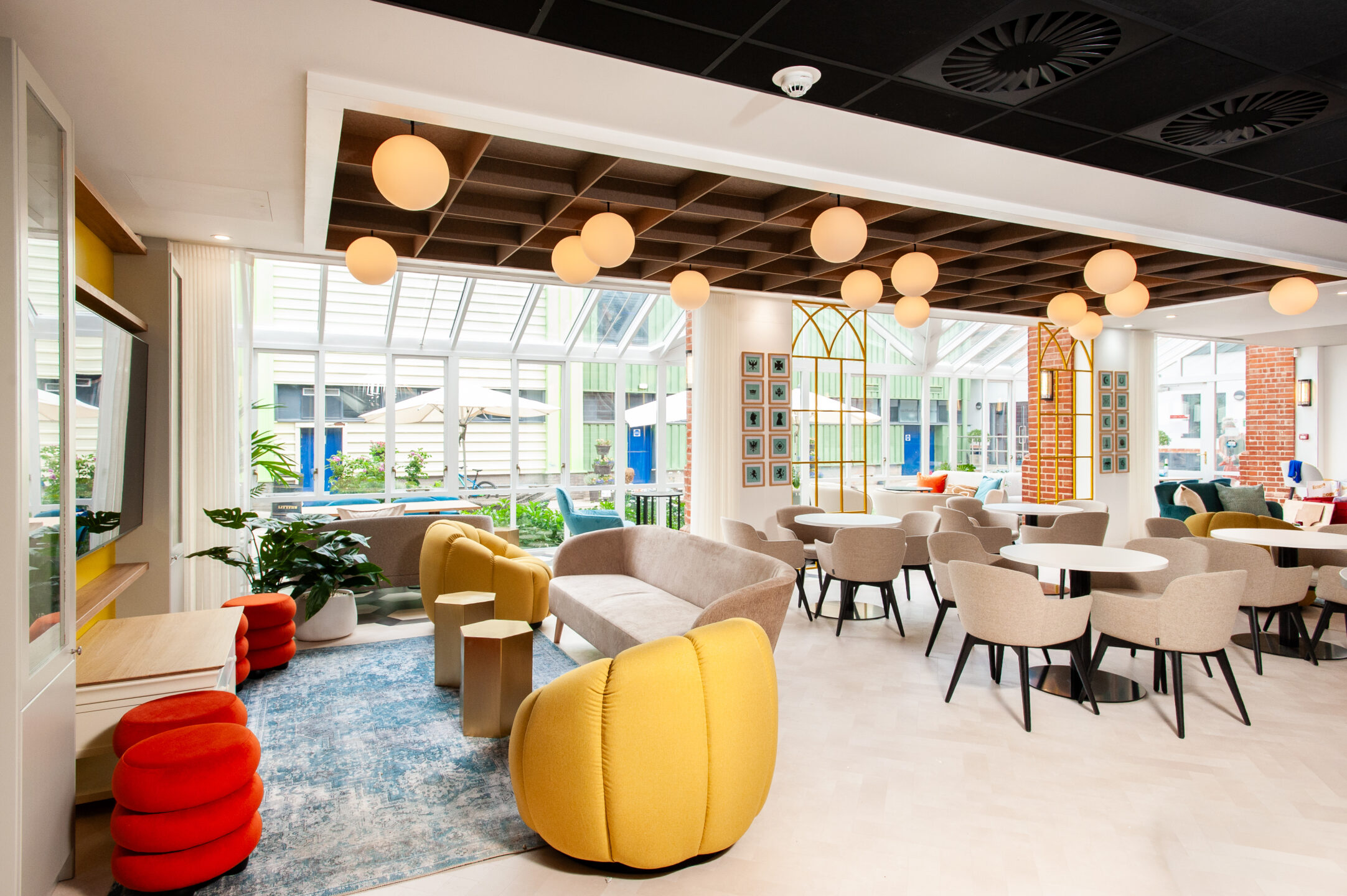
Education Interior Design: The Hospitality Influence

When you walk into a modern university, college or school, the spaces outside of the classroom areas now often look very different to the traditional environments typically associated with education.
Café-style seating, comfortable lounges, collaborative areas and informal meeting spaces are becoming increasingly familiar features. Today there is a greater emphasis on creating environments where students feel comfortable spending time, whether they are studying, socialising, meeting with others or simply taking a break between lessons.
This reflects a wider shift in education interior design, with greater consideration being given to the overall experience of students and staff. Increasingly, inspiration is coming from another sector where experience has always been central to design: hospitality.
Hotels, restaurants and cafés are carefully designed around the people who use them. From lighting and acoustics to furniture, materials and layout, each element contributes to the atmosphere and influences how people experience the space. Many of those same principles can be applied to education, helping to create learning environments that feel welcoming, comfortable and relevant to the way people live and learn today.
From institutional to experience-led
Educational buildings have traditionally been designed around clearly defined functions. Classrooms are for teaching, libraries are for studying, canteens are for eating and corridors are for moving between them.
The reality is that modern education is much more fluid than this. Learning happens in many different ways and in many different places. Students may work independently, collaborate on a group project, meet a tutor, join a discussion, eat lunch, socialise with friends and attend formal teaching sessions all within the same day.
As these activities have changed and developed over time, the spaces supporting them have evolved too.
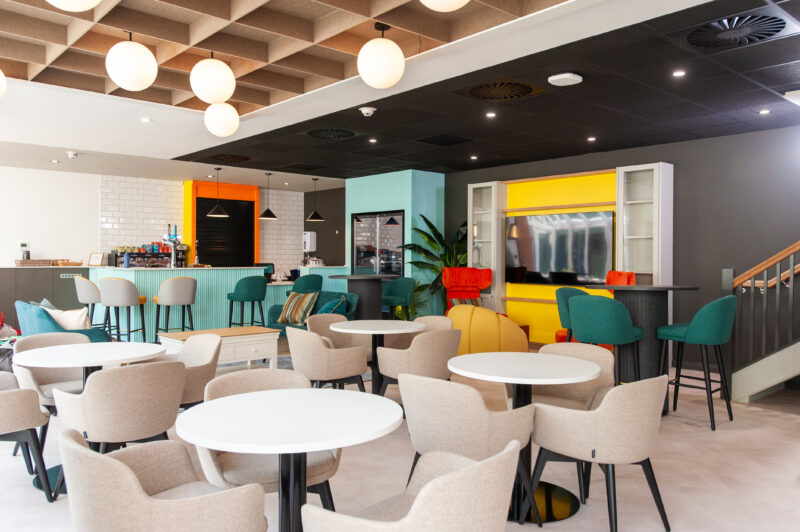
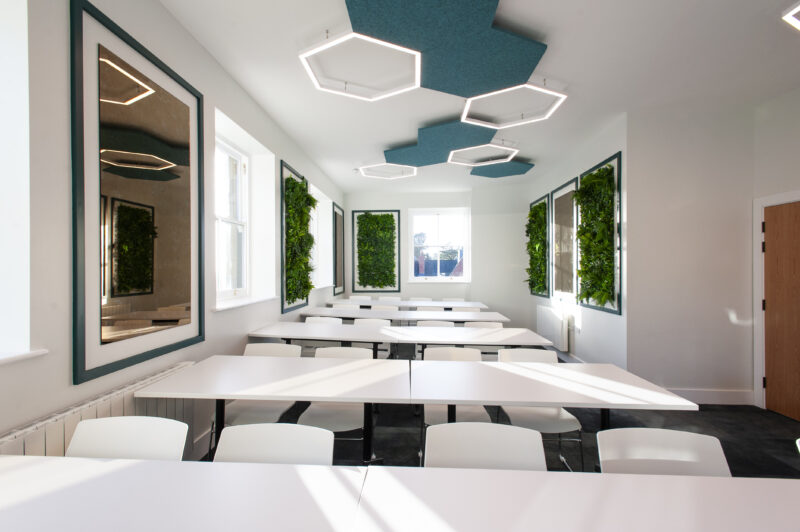
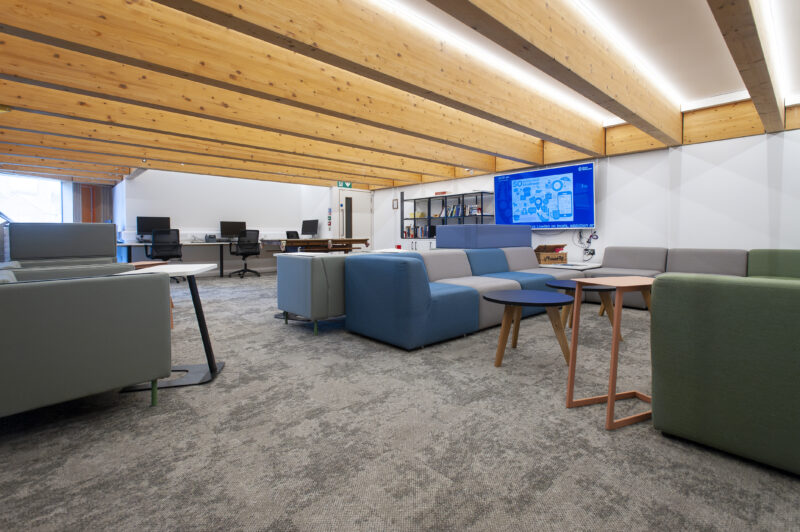
Contemporary education interior design increasingly considers the experience of moving through and spending time within the whole building. Reception areas, atriums, cafés, libraries, corridors and breakout spaces can all contribute to the learning environment.
This is where the influence of hospitality becomes particularly relevant. Hospitality spaces have long been designed to accommodate different activities and levels of interaction within the same environment. A hotel lobby, for example, might include lively social areas alongside quieter seating, places for informal meetings and spaces where someone can comfortably work alone.
Education environments can adopt a similar approach, creating a variety of spaces for students to use throughout their day.
Creating spaces where students actually want to spend time
For colleges and universities in particular, students can spend a significant proportion of their day on campus outside formal teaching sessions. Having comfortable, useful spaces between study and lecture areas can make a considerable difference to their overall experience.
This is one reason café culture has become increasingly visible within education environments.
Coffee shops have become familiar places to work, meet and socialise in everyday life, and many of the characteristics that make them appealing translate naturally into education. Comfortable seating, access to power supply, informal tables and a relaxed atmosphere can create environments students are happy to use between lectures.
The traditional canteen is evolving as a result. Rather than serving a single lunchtime area, thoughtfully designed café and dining spaces can be useful throughout the day for informal meetings, independent study, group work and socialising.
The same thinking can extend to areas of a building that might previously have been regarded simply as circulation space. Atriums, wider corridors and spaces between teaching areas can accommodate seating, booths or small collaboration areas, making better use of the available footprint while providing students with more choice.
Supporting social connection and a sense of belonging
The friendships students form, conversations students have and communities they become part of all contribute to their experience at their school, college or university. The physical environment can create more opportunities for those interactions to happen naturally.
Social spaces are particularly important here. A welcoming café, comfortable lounge or well-positioned breakout area gives people somewhere to meet without requiring an organised activity or formal reason to be there.
This can also help soften the traditional institutional feel that educational buildings sometimes have. Materials, furniture, colour, planting, artwork and lighting can introduce warmth and personality while helping an institution express its own identity.
However, there is a balance that needs to be achieved. An educational environment still needs to be functional, accessible and able to withstand intensive daily use. Furniture and finishes need to be appropriate for high levels of footfall, while spaces must remain easy to maintain and adaptable to changing requirements.
The strongest hospitality influences are therefore often found in the experience a space creates rather than in simply recreating the appearance of a hotel or café.
Designing for a variety of different needs
Creating more sociable education environments should also recognise that students experience spaces differently.
A lively café might be exactly where one student chooses to study, while another may find the activity and background noise distracting. Some people feel comfortable in large open environments, while others prefer smaller spaces with greater privacy and fewer sensory demands.
This is particularly relevant when considering neurodiversity.
Inclusive education interior design can provide a range of environments rather than expecting everyone to learn, work or relax in the same conditions. Alongside open collaborative and social areas, there may be quieter study spaces, individual seating, enclosed booths and areas with lower levels of sensory stimulation.
Choice gives students greater control over the environment they use and allows them to find spaces that suit both their individual preferences and the activity they are undertaking.
The principles of neuroinclusive design can influence everything from colour and wayfinding to furniture layouts, lighting and acoustics. Considering these requirements as part of the wider design process helps create environments that work for a broader range of people.
Acoustics matter in social learning spaces
As educational environments become more open, flexible and sociable, acoustics need careful consideration.
Cafés, atriums and collaborative areas naturally generate conversation and activity. When several functions occupy neighbouring spaces, uncontrolled sound can quickly affect students trying to study, concentrate or communicate elsewhere in the building.
Good acoustic design starts with the layout. Understanding where louder activities are likely to take place allows quieter spaces to be positioned appropriately, while zoning can help create a gradual transition between busy social environments and areas intended for focused work. Materials and finishes can then help manage how sound behaves within each area. Flooring, ceilings, wall treatments, furniture and acoustic products can all contribute to reducing reverberation and creating a more comfortable environment.
This becomes particularly important when designing multi-purpose spaces. A café that doubles as an informal study area, for example, needs to work acoustically for both uses rather than becoming a space that looks inviting but is difficult to spend time in.
Lighting, comfort and wellbeing
Hospitality design also demonstrates how strongly lighting can influence the character of a space.
A uniformly lit institutional environment can feel very different from one where natural daylight and artificial lighting have been considered as part of the overall experience.
Within education environments, different areas may benefit from different lighting approaches. Social and breakout spaces can feel warmer and more relaxed, while study and teaching areas need suitable lighting for concentration and visual tasks. Access to natural daylight should also be considered wherever the building and layout allow.
Lighting is only one part of creating comfortable environments. Temperature, acoustics, furniture, air quality, access to nature and the amount of personal space available can all influence the way that students experience a building.
Together, these elements contribute to student wellbeing and can help create places that feel comfortable to occupy for longer periods.
Where education, workplace and hospitality design meet
The influence of hospitality is not unique to education. Workplace design has been moving in a similar direction for some time. Many contemporary offices now incorporate café areas, lounges, booths, informal meeting spaces and different environments for focused and collaborative work.
There is an interesting crossover between the three sectors.
Hospitality has demonstrated the importance of atmosphere and experience. Workplace design has increasingly focused on flexibility, choice and different ways of working. Education environments can draw from both as learning becomes more collaborative, technology-enabled and less confined to a traditional classroom.
There is also a practical connection between education and the workplace. Students leaving colleges and universities will enter working environments where they may be expected to move between focused work, collaboration, online meetings and informal discussions throughout the day.
Educational environments that provide a similar variety of settings can support those changing behaviours while creating spaces that feel contemporary and relevant.
For Cobus, this crossover provides an exciting opportunity to apply experience from both workplace and education projects, understanding how people use buildings and creating environments around those behaviours.
Human-centred education interior design
The hospitality influence on education is ultimately part of a much wider change in the way spaces are designed. More attention is being paid to the people using a building including how they move through it, where they naturally gather, what helps them concentrate, where they feel comfortable and how their needs change throughout the day.
For education providers, understanding these behaviours can help make better use of existing space and identify opportunities that might otherwise be overlooked. A tired refectory could become a flexible social and learning hub. An underused atrium could provide valuable breakout space. A reception area could create a much stronger sense of welcome and identity.
Successful education interior design brings these elements together while considering the practical demands of the environment, from durability and accessibility to acoustics, flexibility and long-term maintenance.
As expectations of educational environments continue to evolve, the influence of hospitality provides valuable lessons. Creating spaces that feel welcoming, comfortable and considered can help educational institutions provide a better experience for the people who use them every day, while supporting learning, social connection and wellbeing throughout the wider campus.