
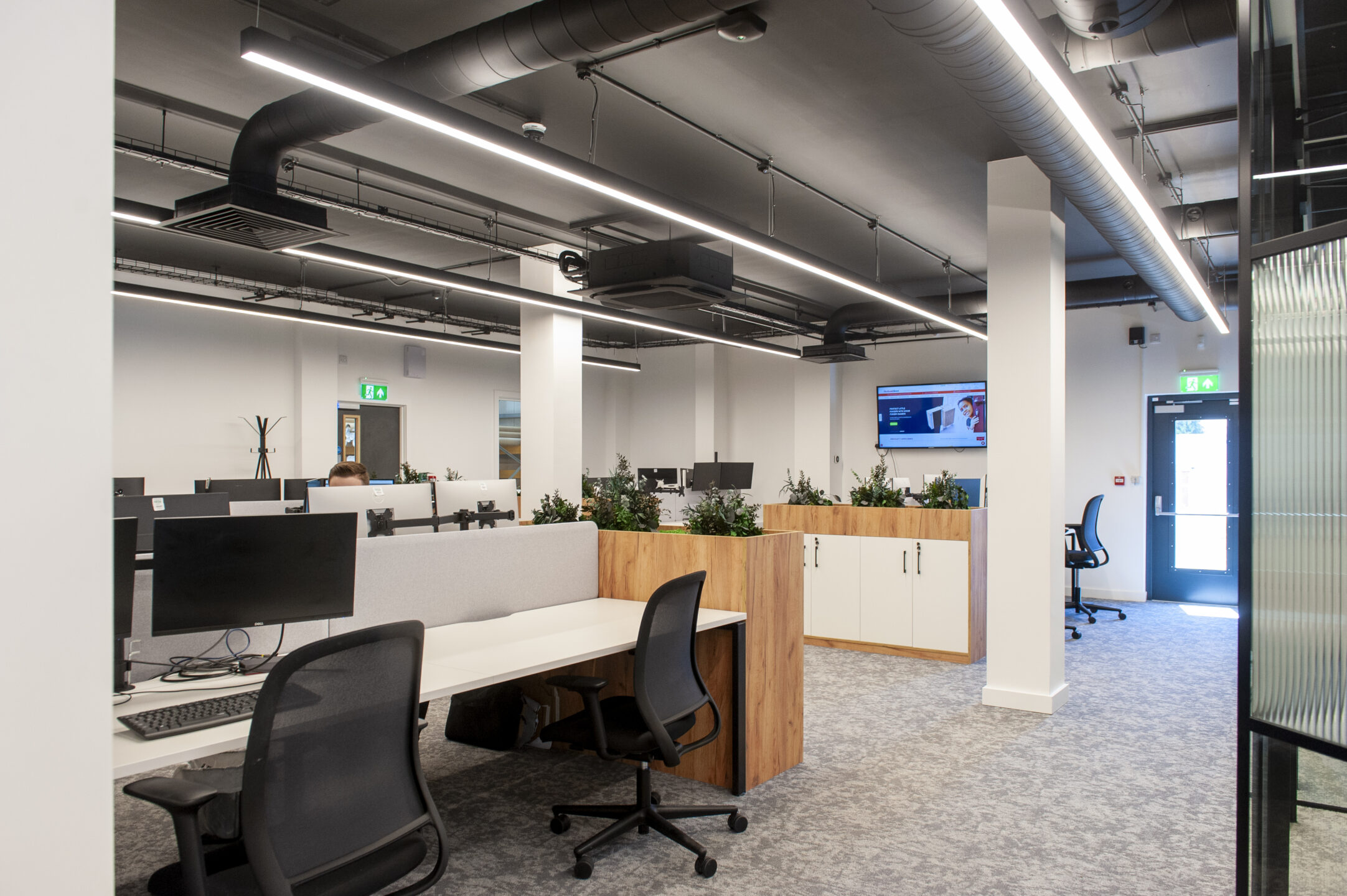
Building A Culture of Innovation with Flexible Office Spaces

In today’s competitive business landscape, staying ahead requires more than just efficiency, it requires vision. Organisations that continually adapt, experiment and evolve are those that thrive.
A culture of innovation in the workplace means embedding curiosity, adaptability, and problem-solving into daily routines. It encourages team members to think differently, challenge norms, and design new ways of working.
The physical environment around us has a powerful influence on how we think and behave. In fact, studies have shown that companies that invest in powerful workplace design report higher levels of retention, creativity, and overall profitability. Productivity levels in particular increase by up to 25% thanks to well-designed work environments.
By focusing on flexible office design innovation, ambitious businesses can create conditions where flexible work, experimentation, and collaboration thrive. In this guide, we explore how office spaces help organisations foster creativity and open up their people’s full potential.
Why Flexible Workspaces Encourage Innovation
Innovation does not flourish in rigid, static spaces. It needs adaptable, responsive working environments that reflect the evolving nature of modern businesses. Flexible workspaces support different work models, enabling employees to move seamlessly between quiet focus, creativity, collaboration, and hybrid meetings.
Think outside the box of a traditional office and how you can embrace a flexible office where organisations can experiment with fresh layouts, functions, and technologies.
By creating spaces that evolve as teams and projects change, companies give employees the freedom to think creatively and solve problems in new ways. This adaptability directly links to improved productivity, as people are no longer confined by structured environments.
Much research has been carried out which demonstrates how flexible office design innovation can encourage work-life balance, increase engagement, and create thriving conditions where employees feel empowered. The right space doesn’t just mean how it looks aesthetically, it’s how it can help boost employee resilience and long-term performance.
Design Elements that Support Innovation
Dynamic Layouts with Modular Furniture
Being able to adapt to the ever-evolving workplace is where new ways of thinking are brought to the forefront. Modern offices use modular desks, reconfigurable seating, and mobile partitions to create state-of-the-art office spaces that can be altered in real time.
This ability for teams to rearrange the layout of the office for brainstorming sessions, client presentations, and day-to-day work showcases more than how you can modify a space, but tailors your business to today’s market.
Collaboration Hubs and Quiet Focus Zones
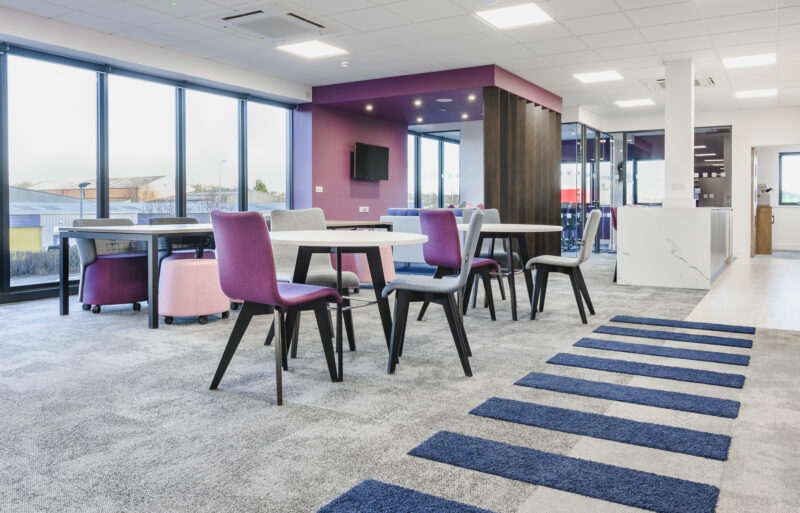
A workplace should be about balance, and this is true when looking at both team collaboration and individual focus. From dedicated hubs and interactive screens, to video conferencing that enables seamless collaboration in meetings, all this contributes to a successful hybrid team.
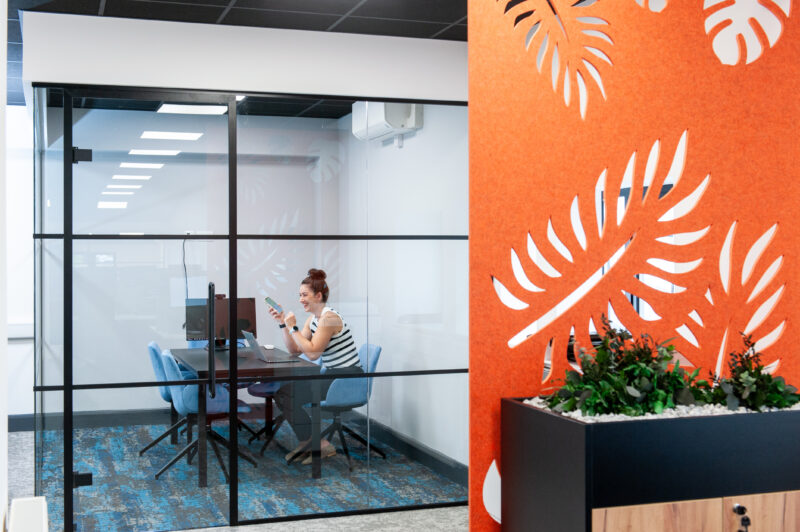
There are also times where quiet zones are needed for deep thinking, concentration and problem-solving. By providing both options, organisations can deliver work environments that support all stages and styles of working, to support those first sparks of inspiration to refine the final product.
Inspirational Environments with Natural Elements
Not much inspiration comes from a tired-looking office. Don’t be afraid to bring in biophilic design, thoughtful colour palettes and natural light to elevate the mood of everyone around you and encourage new ways of thinking.
Greenery, textures, and materials drawn from nature promote well-being and support work-life balance, which in turn leads to improving employee productivity. When people feel energised, comfortable, and supported by their surroundings, they’re far more likely to explore new ideas.
Informal Spaces that Encourage Serendipity
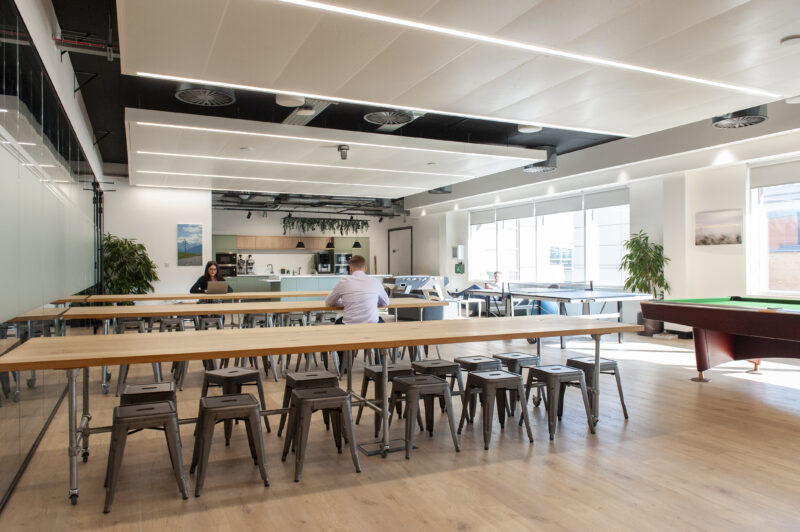
Some of the most valuable innovations emerge from chance conversations. Think of how many times you’ve had a great idea from a change of scenery, or when you’re bouncing different thoughts between team members? Break-out lounges, casual seating areas and cafe spaces disconnected from the desk area help with these spontaneous moments.
Practical Steps for Businesses
Assess Current Workplace Use and Employee Needs
When evaluating how you can improve and build an innovative culture, the first step is to understand how your office space currently works. Carry out an audit for desk use, meeting room bookings, and employee behaviour. Then, combine this with focus groups and surveys to develop data-led insights. This gets to the bottom of how flexible workplaces can be tailored to the needs of your workforce instead of just assumptions of what you think they want.
Involve Employees in the Planning
If you’re working on a workplace strategy to revolutionise your office space, employee buy-in is hugely valuable. By involving employees in your planning process, as a collective, you’re shaping design templates that will benefit everyone. Team members are then more engaged, motivated and willing to adopt new ways of working when they feel heard. It’s all about co-creation and a sense of togetherness which helps to strengthen a culture of ownership, trust, and above all, improving employee engagement.
Design Multipurpose Areas
Every modern business experiences different tasks, encounters and experiences every single week. From presentations to training, project management to client meetings, they all serve a purpose for the success of the company.
Designing multipurpose spaces ensures your office space can adapt to each activity. Rooms equipped with movable walls, adaptable furniture, and integrated video conferencing technology deliver state-of-the-art functionality. This versatility is a foundation of innovative workplace design, enabling organisations to adapt instantly to new challenges and opportunities.
Add Inspirational Touches
Creativity is all around us. Introduce greenery, artwork and unique lighting that contribute to a curated interior design that helps to stimulate a vibrant environment, filled with curiosity and imagination.
Combined with supporting employee wellbeing, features such as ergonomic furniture and acoustic solutions can create a workplace where employees’ performance consistently improves.
Measure Success and Continuously Improve
Innovation is not static, and neither is office design. Measuring success through engagement surveys, metrics, and productivity KPIs ensures that your flexible office design evolves with your workforce. By iterating and improving, businesses maintain increased productivity while nurturing employee growth and employee satisfaction.
It’s time to reimagine your business space so that it drives innovation and propels the way your organisation works. Speak to Cobus Spaces to discuss how our unique four-stage methodology can enhance your company culture with an office built for future success.